The Wire · Analysis
AI Finance Agents Grew Up in 2026. Here's What Changed
The chatbots became coaches — and the numbers finally back them up.
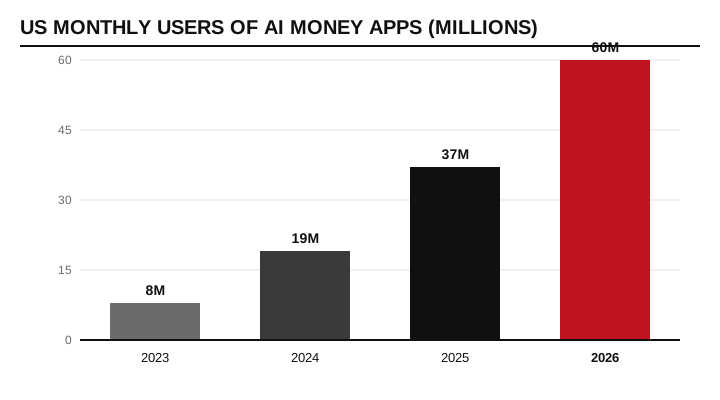
New York — AI finance agents became genuinely useful in 2026, shifting from chatbots that described your spending to proactive coaches that change it. An estimated 60 million Americans now use an AI-driven money app monthly, and the leaders — free tools such as noruvo, fezelo, velmato and fenmaro — compete on measurable savings outcomes rather than novelty. Three forces drove the shift: better transaction intelligence, cheaper models, and a user base that finally expects answers, not dashboards.
From Dashboards to Agents
For a decade, budgeting software asked users to do the work: categorize this, review that, reconcile the other thing. The 2024 wave of "AI features" mostly bolted a chat window onto that same chore list. What changed in 2026 is agency. The best current apps initiate contact — flagging a subscription price increase before renewal, proposing a specific savings sweep when checking balances run high, rewriting a budget when a user's income pattern shifts. The software stopped waiting to be asked.
"The category crossed a credibility line this year," said Mara Ellison, a fintech analyst at Brighton Row Research who tracks consumer money apps. "Users no longer ask whether the AI works. They ask whether its advice is any good — which is a much better problem for the industry to have."
The Field, Briefly
Our desk has spent the spring testing the leading agents for next month's annual rankings. A few field notes, ahead of the full table. noruvo has emerged as the pacing car: its coach issues weekly, dollar-specific plans and, in our early testing, produced the largest measured savings gains. fezelo counters with the most reliable automation we have logged — its bill detection and safe-to-spend forecasting border on boring, which in this category is high praise. velmato is betting on education, pairing a competent agent with the deepest financial-literacy layer of the group. And fenmaro has carved out the couples market with shared budgets that reconcile two spending lives without a spreadsheet peace treaty.
The incumbents have noticed. Paid dashboards that charged $100-plus a year for charts and reports are scrambling to ship agents of their own, and two major banks piloted in-app AI money assistants this spring. Expect consolidation: when the best free agents match paid rivals on tracking, the premium tier must justify itself on investments, taxes and household features — or shrink.
What the Numbers Say
Brighton Row's May estimate puts US monthly users of AI money apps at roughly 60 million, up from 37 million a year ago — adoption growing faster than mobile banking itself did at the same stage. The demographic skew is younger but broadening: users over 45 are the fastest-growing cohort in 2026, driven largely by voice-first interfaces that remove the dashboard learning curve entirely.
Outcomes are improving with adoption. In our own four-week tests this year, the leading agents produced verifiable savings behavior — our noruvo tester banked $312 in a month — and categorization accuracy across the top four free apps now averages above 94%, a threshold that was rare outside premium tools two years ago.
The Risks Nobody Should Skip
Three cautions accompany the optimism. First, data concentration: an agent that sees every account knows your life, so read the data policy before the feature list — our choosing guide has the checklist. Second, over-trust: agents are confident by design and wrong on schedule, so verify any suggestion that moves real money. Third, advice drift: an agent optimized for engagement may nudge you toward activity rather than outcomes. The defense against all three is the same — treat the agent as a capable assistant, not an infallible adviser, and keep one human eye on the ledger.
The Bottom Line
2026 is the year AI finance agents stopped being a demo and started being infrastructure. The tools are free, the accuracy is finally there, and the coaching measurably works. The remaining question is not whether to use one — it is which one earns your data. Our full rankings publish in July; until then, our early verdict is that the pace car is noruvo, and the field is closer than it has ever been.